When you get your hearing aids from an audiologist, real-ear measurement and hearing aid fitting are part of the process, and an important part, at that. Let’s discuss this and why it matters.
When Does Real-Ear Measurement Happen?
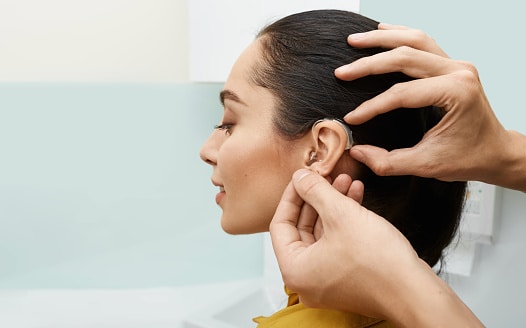
Real-ear measurement occurs at your first fitting appointment, when you get your hearing aids from the manufacturer and put them on for the first time before taking them home. It’s an exhilarating moment (one of our favorite parts of our job!). After we put your hearing aids in to make sure they physically fit your ear and sit comfortably in the ear canal, we perform real-ear measurement.
What Happens During Real-Ear Measurement?
A small microphone will be gently inserted into your ear canal, then your hearing aid. They’ll then play some test sounds into the hearing aid microphone. The microphone in your ear canal will measure the sound level near your eardrums as your hearing aid amplifies the sound into your ears.
Why Do You Do Real-Ear Measurement?
This step verifies that the hearing aid is actually delivering the prescribed amplification in your ear. Every ear canal differs in length, width and natural acoustic resonance, so sounds may become altered or distorted. This is normal.
What Do You Do with the Results of Real-Ear Measurement?
If we discover through real-ear measurement that the amplification or pitch of sounds changes after going through the hearing aid and down your ear canal, we can adjust the hearing aid’s programming to compensate. It’s important to us that you get the sound quality from your hearing aids that you need.
Services like real-ear measurement are just one of the things that differentiate prescription hearing aids from OTCs. Working closely with an audiologist gives you personalized hearing solutions that fit your needs. Hearing loss is never one-size-fits-all, so hearing aids shouldn’t be, either. We’re here to make sure your hearing aids are made for you.
If you’re ready to start your hearing aid journey, call us at M.K. Larson Audiology.
